Desks & Office • Furniture Guide
How to Evaluate a Solid-Wood Desk for a Home Office
A desk is more than a surface beneath a laptop. It is a small landscape for concentration: a place where screens, papers, lamps, and daily habits meet. Choosing well means looking beyond the wood’s color to assess dimensions, construction, storage, and how the piece will work in the room over time.
Begin with the room, not the showroom
The most appealing desk can become an awkward obstacle if it overwhelms the room or leaves too little space to move. Before comparing styles, measure the area where the desk will stand. Record the available width and depth, then note nearby doors, windows, radiators, outlets, and paths people use to cross the room. A desk should fit its location without making the rest of the space feel pinched.
Measure the desk’s full footprint, including any drawers, side cabinets, or projecting hardware. Leave room for the chair to slide back and for you to stand comfortably. If the office is also a guest room, dining area, or shared family space, think about how the desk’s position will affect those other uses. The goal is not simply to make the furniture fit; it is to preserve a workable route through the room.
Marking the proposed outline on the floor with painter’s tape can make scale easier to judge. A paper template works too. Then sit in the marked area with a chair and imitate your usual work routine: roll back, turn to reach a shelf, open a drawer, and get up. This simple exercise reveals space conflicts that a measurement alone may miss.
Measure the work, not only the furniture
A home office desk must accommodate the tools and activities that make up a workday. List what will live on the surface: monitor or laptop, keyboard, mouse, notebooks, reference books, charging station, task light, and perhaps a printer or drawing materials. Include items that are used often enough to deserve a permanent place. The desk’s usable area should support those objects without forcing them into a crowded arrangement.
Desktop width affects how equipment can be arranged side by side. Depth determines the distance between your eyes and a screen, and whether there is room in front of the keyboard for your hands and notes. A shallow top may be suitable for a laptop and occasional writing, but a larger monitor, paperwork, or two-screen setup may call for more depth. Think about the work pattern rather than choosing a dimension because it looks generous in a product listing.
Check the underside as carefully as the top. Aprons, drawer boxes, supports, and crosspieces can reduce knee and legroom. Sit at a comparable-height table or use a chair in the intended location to test whether your knees clear the structure and your feet rest comfortably. If the desk will be shared by people of different heights, that variation should inform the choice. A beautiful top is of little use if the supporting structure makes long periods of sitting uncomfortable.
Also consider the height of the chair and the equipment. A desk that is too high may encourage raised shoulders; one that is too low can make the work surface feel cramped. Chairs, keyboards, and monitors can be adjusted, but those adjustments have limits. Compare the desk’s listed height with the chair and equipment you already own, and check whether a keyboard tray or other accessory would alter the available space.
Understand what “solid wood” tells you
The phrase solid wood is useful, but it is not a complete construction report. Ask which parts of the desk are solid wood: the top, legs, apron, drawer fronts, drawer sides, and back panels may not all be made from the same material. Some furniture combines solid-wood frames with veneered panels or engineered components. That is not automatically a flaw, but understanding the materials helps you know what you are evaluating and how the desk may respond to wear and care.
Wood is a natural material, with grain, color, and small variations that make each board distinct. A solid-wood surface may show differences in figure, tone, or mineral marks. These are characteristics of the material, not necessarily defects. If a particular appearance matters, ask what wood species and finish are available, and whether the finished piece will resemble a sample closely or vary from it.
Species influence color, grain, weight, hardness, and the character of the finished desk. Maple often has a relatively fine, even appearance; cherry tends to deepen in color with exposure to light; walnut is commonly selected for its darker tones and distinctive grain. These are broad tendencies, not guarantees: boards vary, and finishes change how wood looks. The practical question is whether the material and finish suit your room, care preferences, and expectations for natural variation.
Solid wood also changes in response to shifts in moisture. Well-designed furniture accounts for seasonal movement rather than treating wood as an inert sheet. Ask how the top is attached to the base and whether the construction allows for ordinary expansion and contraction. A clear, specific explanation can tell you more than a broad claim about strength or heirloom quality.
Look closely at joinery and stability
Construction details matter because a desk experiences repeated, everyday forces: leaning, writing, opening drawers, moving equipment, and occasional bumps from a chair. Examine how the legs meet the apron and how the frame is braced. A desk should stand level and feel steady in normal use. If you can inspect a sample in person, gently test for rocking and listen for looseness or creaking. For an online purchase, look for clear construction descriptions and ask questions if essential details are missing.
Joinery is the way components are connected. Different joints suit different locations and designs; no single term guarantees a well-made desk. What matters is whether the joinery is appropriate for the forces involved and executed cleanly. Ask how the base is assembled, how the top is secured, and whether the maker provides guidance for tightening or maintaining connections over time.
Consider the full support system, not just the thickness of the desktop. A thick top can still feel unstable if the base is poorly braced, while a thoughtfully designed frame can provide dependable support without looking bulky. Pay attention to the distance between legs, the shape of the apron, and any center supports. These features affect both stiffness and the amount of unobstructed space beneath the desk.
For a desk that will carry substantial equipment, review any stated weight guidance and distribute heavy items sensibly. Keep the heaviest equipment near supported areas rather than assuming every part of the top is equally suited to a concentrated load. A well-built desk is designed for use, but matching the intended load to the construction remains a practical part of evaluation.
Test drawers and storage in real terms
Storage is most useful when it reflects how you work. A drawer can hold notebooks, stationery, cables, or small tools, but its presence may reduce legroom or determine where you can sit. Decide whether you need a shallow organizer for frequently used items, deeper storage for documents, or no drawers at all. Open shelving or a separate cabinet can sometimes provide more flexible storage without occupying the space immediately beneath the desktop.
Check drawer dimensions and placement rather than relying on the number of drawers. A narrow drawer may be convenient for pens but too small for paper; a deep drawer may hold supplies but be awkward to reach while seated. Consider which side you prefer for storage and whether the drawer can open fully without striking a wall, chair, or nearby furniture. Look at the handle or pull, too: hardware should be easy to grasp and should not catch clothing or interfere with your legs.
Drawer movement is a small detail repeated many times. Ask about the slides or runners and whether drawers are designed to extend fully. When inspecting a desk, open and close each drawer slowly, then test it with a modest load if appropriate. Movement should feel controlled, with no obvious scraping, sticking, or excessive side-to-side play. Traditional wood runners and modern slide systems can both work well; the important factors are fit, smooth operation, and serviceability.
Some furniture makers use dovetail joints in drawers. These interlocking shapes are one recognizable woodworking technique, but a joint name by itself does not describe the drawer’s overall quality. Examine how the drawer is fitted, how its bottom is supported, and whether the materials are suitable for the intended use. Details should be considered together rather than treated as isolated proof of durability.
Choose a finish for everyday life
A finish affects how wood looks, feels, and responds to ordinary use. Oil finishes can leave a tactile, natural appearance, while film-forming finishes create a more distinct protective surface. Products and application methods vary, so ask the maker what finish is used, how it should be cleaned, and whether it can be repaired or renewed locally. Avoid assuming that a “natural” label means maintenance-free or that a glossy finish is automatically more durable.
Consider what the desk will encounter: coffee cups, skin oils, pen marks, sunlight, cleaning products, and the friction of equipment being moved. Use coasters or desk pads where appropriate, and follow the maker’s care instructions. Abrasive cleaners and unapproved polish can alter a finish. If the work surface is likely to see frequent spills or intensive use, make that part of the conversation before choosing a finish.
Wood changes subtly with time and light. The color may mellow or deepen depending on species and exposure, while the surface gathers a history of use. Positioning the desk away from strong direct sunlight can help limit uneven color change. A finish sample is helpful, but it cannot predict every variation in the boards or the way a piece will age in a particular room.
Match the shape to the room and routine
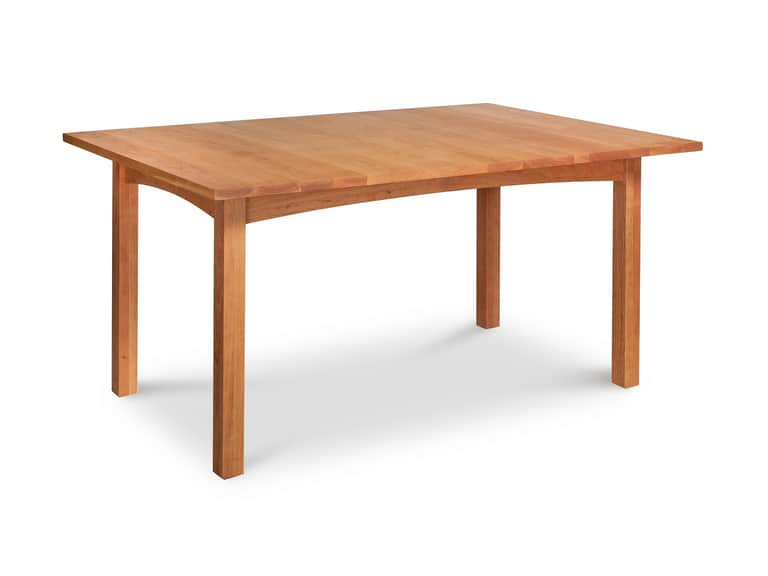
A rectangular desk is straightforward to place against a wall or in the center of a room, and its full perimeter can be measured easily. A writing desk with a clean underside may suit a laptop-based setup or a room where a lighter visual profile matters. Larger desks can support more equipment and paperwork, but they also occupy more floor area and can encourage a permanent spread of objects. More surface is useful only when it serves a real task.
Corner desks can use an otherwise awkward area, but they require careful measurement of the corner, wall angles, and chair position. A return or side extension may provide separate zones for computer work and writing. Before selecting a complex shape, map the footprint and confirm that the monitor, chair, and drawers will all remain accessible. Think about where cords will run and whether outlets are within reach.
The desk should also belong to the room visually. Wood tone, profile, and scale influence how it relates to bookcases, storage pieces, flooring, and trim. A simple form can sit comfortably among varied styles, while a strongly defined silhouette may become a focal point. The aim is not to make every piece match exactly, but to create a room that feels considered and usable.
Plan for movement through the office. A desk should not block a door, obscure a window you rely on, or leave a chair stranded in a narrow passage. If the room serves several purposes, evaluate the desk from every approach, not only from the seated position. Good layout is often quiet and unremarkable: the furniture works, and the room remains easy to use.
Ask practical questions before deciding
When details are not provided, a short list of precise questions can make comparison more meaningful. Ask for overall dimensions, desktop thickness, legroom measurements, drawer interiors, material by component, finish type, assembly requirements, and care instructions. If the desk is made to order, confirm the available options and whether changes to dimensions or hardware affect the construction or schedule.
Clarify how the desk will arrive. Some pieces require assembly; others may be delivered as a more complete unit. Confirm doorways, stair turns, elevator access, and the route to the office before delivery. A desk that fits the room can still be difficult to bring into it. If the piece is heavy, plan for safe handling rather than relying on an improvised lift.
Review the warranty and the policy for damage or defects, along with any instructions for initial setup. For made-to-order furniture, check the expected production and delivery timeline. These logistics do not measure craftsmanship, but they influence whether the desk is a practical choice for your circumstances.
Compare desks using the same criteria. One listing may emphasize the wood species, another the finish, and another the storage layout. A simple comparison sheet helps keep important differences visible: dimensions, clear legroom, materials, joinery information, drawer operation, finish care, assembly, and delivery. This is more useful than choosing by a single headline feature.
A concise evaluation checklist
- Measure the room, the delivery route, and the intended desk footprint.
- List the equipment and materials the work surface must hold.
- Check desktop width and depth against your actual work habits.
- Confirm desk height and unobstructed knee and legroom.
- Ask which components are solid wood and identify other materials used.
- Examine the frame, joinery, bracing, and method of attaching the top.
- Test drawers for useful dimensions, clearance, and smooth movement.
- Understand the finish, cleaning requirements, and repair options.
- Check assembly, delivery access, production time, and warranty details.
- Consider how the desk will function alongside the room’s other uses.
A desk should support the day ahead
Evaluating a solid-wood desk is an exercise in connecting material to daily life. The grain may first draw the eye, but dimensions determine whether the workspace feels open or crowded. Joinery and framing influence steadiness. Drawer design shapes how supplies are reached, while finish and care instructions help set expectations for years of use.
The best home office desk is not necessarily the largest or most elaborate. It is the one that fits the room, supports the equipment and tasks it will actually serve, and feels comfortable through an ordinary working day. Measure carefully, ask specific questions, and look at the construction as a whole. With those habits, a desk becomes more than furniture: it becomes dependable ground for attention, planning, and work.